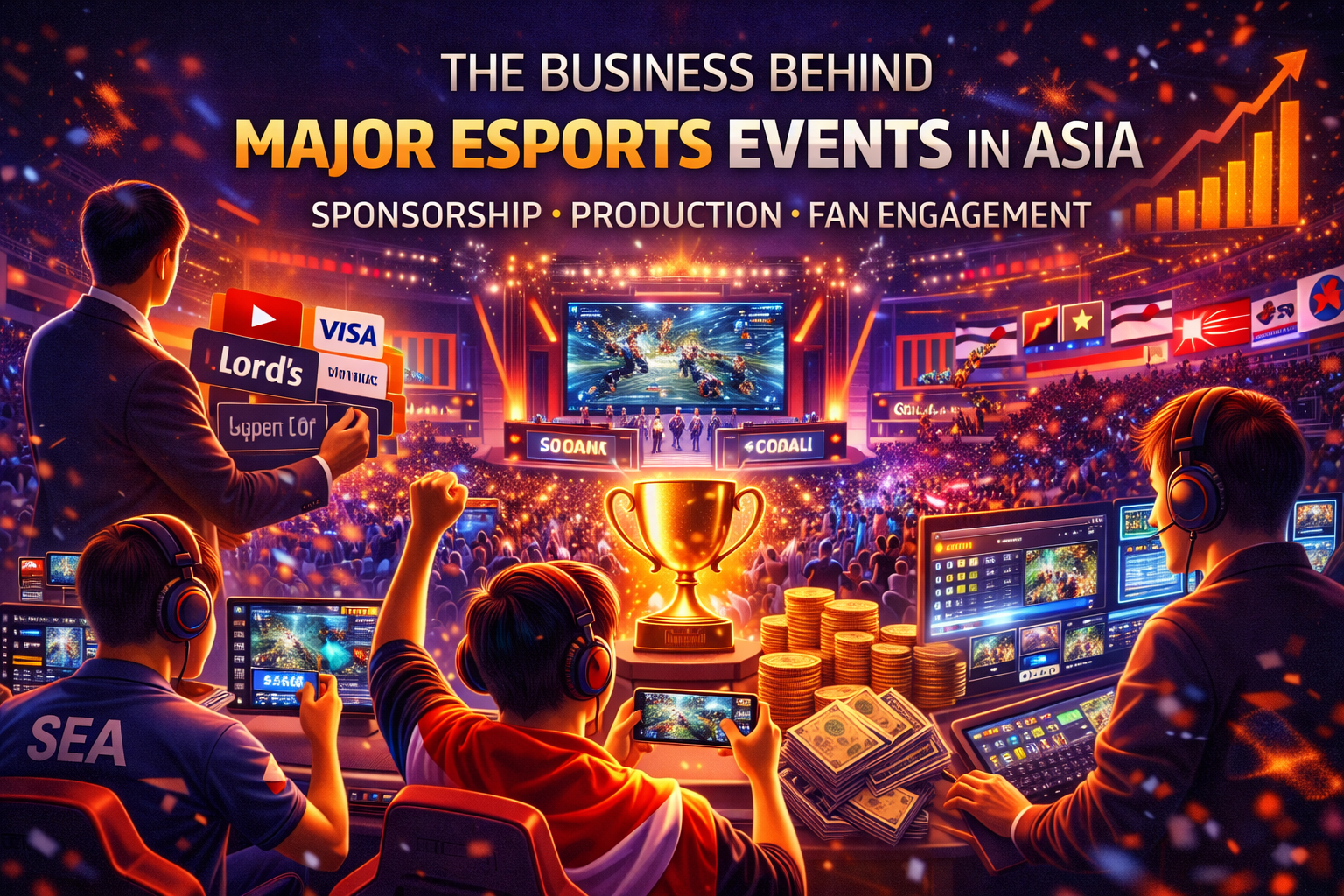
Esports events in Asia have evolved into large-scale productions that rival traditional sporting events. From packed arenas to millions of online viewers, these tournaments are not just about competition—they are complex business operations driven by multiple revenue streams and strategic planning.
Understanding the business behind these events reveals how esports has grown into a sustainable and highly attractive industry for investors, brands, and stakeholders.
The Scale of Modern Esports Events
Major esports tournaments in Asia are known for their impressive scale. Events are often hosted in large venues, featuring advanced stage designs, high-quality broadcasts, and extensive fan engagement activities.
These productions require significant investment and coordination, involving multiple stakeholders including publishers, organizers, sponsors, and media partners.
Key Components of Large-Scale Events
- Venue selection and event logistics
- Broadcast production and streaming infrastructure
- Marketing and audience engagement strategies
Each component plays a crucial role in delivering a successful event.
Sponsorship as a Primary Revenue Driver
Sponsorships are one of the most important sources of revenue for esports events. Brands invest in tournaments to gain visibility and connect with highly engaged audiences.
In Asia, sponsorship portfolios have expanded beyond gaming-related companies to include industries such as finance, technology, and consumer goods.
Types of Sponsorships
- Title sponsorships for major events
- Brand integrations within broadcasts
- On-site activations and fan experiences
These partnerships provide financial support while enhancing the overall event experience.
Media Rights and Broadcasting Revenue
Media rights have become an increasingly valuable aspect of esports events. Streaming platforms and broadcasters compete for exclusive rights to showcase major tournaments.
This competition drives up the value of media deals, contributing significantly to overall revenue.
Broadcasting Opportunities
- Exclusive streaming agreements
- Multi-language broadcasts for regional audiences
- Integration with digital platforms and social media
These strategies help maximize reach and engagement.
Ticket Sales and Live Audience Experience
While digital viewership dominates esports, live events remain an important part of the ecosystem. Ticket sales contribute to revenue and create memorable experiences for fans.
Organizers focus on creating immersive environments that combine competition with entertainment.
Enhancing Live Experiences
- Interactive fan zones and activities
- Merchandise and exclusive content
- High-quality stage design and production
These elements encourage attendance and build stronger connections with fans.
Merchandising and Digital Content
Merchandising is another revenue stream that continues to grow. Event-specific products, team merchandise, and digital collectibles provide additional income opportunities.
Digital content, including highlights, interviews, and behind-the-scenes footage, also plays a significant role in monetization.
Revenue Opportunities
- Official merchandise sales
- Digital content distribution
- Exclusive fan experiences and subscriptions
These offerings extend the value of events beyond the competition itself.
The Role of Publishers and Organizers
Game publishers and event organizers are central to the success of esports tournaments. Publishers often control the competitive ecosystem, while organizers handle logistics and production.
Collaboration between these parties is essential for delivering high-quality events.
Key Responsibilities
- Publishers: Game development, rules, and competitive structure
- Organizers: Event planning, production, and execution
This partnership ensures consistency and professionalism.
Fan Engagement as a Business Strategy
Fan engagement is at the heart of esports events. Organizers use various strategies to keep audiences involved before, during, and after tournaments.
Engaged fans are more likely to support teams, purchase merchandise, and participate in future events.
Engagement Strategies
- Social media campaigns and interactive content
- Live streaming with real-time interaction
- Community-driven activities and competitions
These efforts help build long-term loyalty.
Challenges in Event Management
Organizing major esports events comes with challenges. These include managing costs, ensuring technical reliability, and meeting audience expectations.
The fast-paced nature of the industry requires constant adaptation and innovation.
Common Challenges
- High production and operational costs
- Technical issues and infrastructure demands
- Balancing profitability with audience experience
Addressing these challenges is key to long-term success.
The Future of Esports Events in Asia
The future of esports events in Asia is bright, with continued growth expected across all areas. Advances in technology, increased investment, and expanding audiences will drive further development.
Hybrid events that combine physical and digital experiences are likely to become more common.
Future Trends
- Integration of immersive technologies such as AR and VR
- Expansion of global partnerships and collaborations
- Enhanced personalization for viewers and attendees
These trends will shape the next generation of esports events.
A Complex and Thriving Industry
The business behind esports events in Asia is both complex and dynamic. Multiple revenue streams, strategic partnerships, and innovative approaches come together to create successful tournaments.
As the industry continues to evolve, these events will play a crucial role in driving growth and shaping the future of esports. For stakeholders, understanding this business model is essential to navigating and capitalizing on the opportunities within competitive gaming.