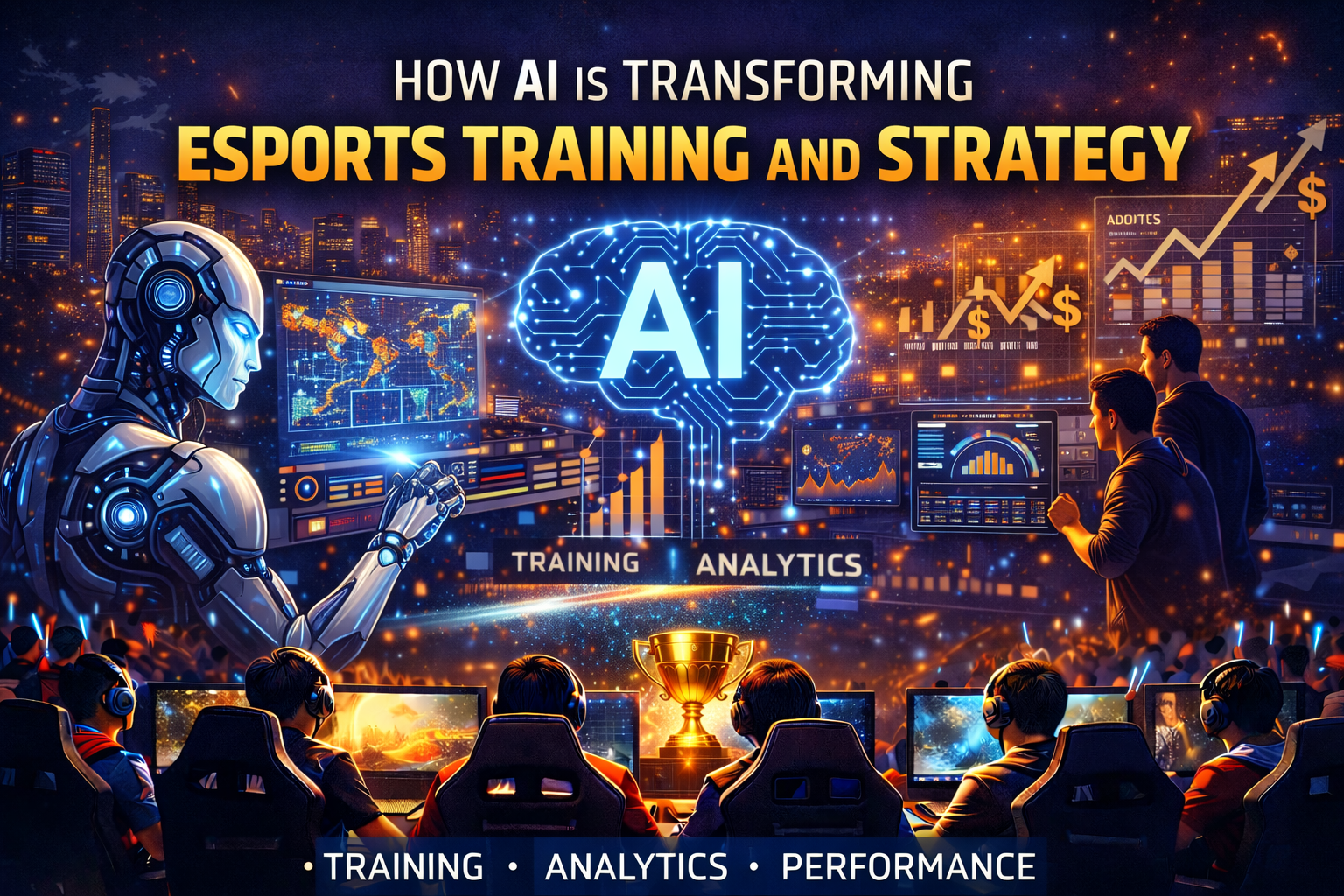
How AI Is Transforming Esports Training, Analytics, and Performance Optimization
Artificial intelligence is rapidly becoming a cornerstone of innovation in esports. Across Asia, teams, organizations, and platforms are leveraging AI to gain a competitive edge, enhance training efficiency, and improve overall performance.
What was once driven purely by instinct and manual analysis is now supported by advanced data models and intelligent systems. This shift is not only changing how players train but also how teams strategize and compete at the highest levels.
The Role of AI in Modern Esports
AI in esports refers to the use of machine learning algorithms and data analysis tools to interpret gameplay, predict outcomes, and optimize strategies. These systems process vast amounts of data far beyond human capability, providing insights that were previously inaccessible.
In Asia’s highly competitive esports environment, even small advantages can make a significant difference. AI helps teams uncover those advantages by identifying patterns and trends in gameplay.
Key Applications of AI
- Gameplay analysis and performance tracking
- Opponent strategy prediction
- Real-time decision support
These applications are transforming esports into a more data-driven discipline.
Enhancing Player Training and Development
Training is one of the areas where AI has the most immediate impact. Players can now receive detailed feedback on their performance, including metrics such as reaction time, positioning, and decision-making.
This level of analysis allows players to focus on specific areas for improvement, making training more efficient and targeted.
Benefits for Players
- Personalized training programs based on data insights
- Objective performance evaluation
- Faster skill development through targeted practice
These benefits are particularly valuable in Asia, where competition is intense and the margin for error is minimal.
Advanced Analytics for Team Strategy
Beyond individual performance, AI is playing a crucial role in team strategy. Coaches and analysts use AI tools to study opponents, identify weaknesses, and develop game plans.
These systems can simulate different scenarios, allowing teams to test strategies before implementing them in actual matches.
Strategic Advantages
- In-depth opponent analysis
- Data-driven decision-making
- Improved coordination and teamwork
This analytical approach is elevating the strategic complexity of esports competitions.
Real-Time Insights During Matches
AI is not limited to pre-match preparation. During matches, real-time analytics provide valuable insights that can influence decision-making.
While direct in-game assistance is often restricted to maintain fairness, teams can use AI-generated insights between matches or during breaks to adjust strategies.
Real-Time Applications
- Performance monitoring during live matches
- Adaptive strategy adjustments
- Enhanced coaching support
These capabilities add a new layer of depth to competitive gameplay.
AI in Talent Scouting and Recruitment
Identifying new talent is another area where AI is making a significant impact. Traditional scouting methods rely heavily on manual observation, which can be time-consuming and subjective.
AI systems can analyze large datasets of player performance, identifying promising individuals based on specific criteria.
Scouting Benefits
- Efficient identification of high-potential players
- Objective evaluation based on data
- Broader reach across different regions
This approach helps organizations discover talent that might otherwise go unnoticed.
Improving Viewer Experience Through AI
AI is also enhancing the spectator experience. From automated highlights to real-time statistics, technology is making esports broadcasts more engaging and informative.
In Asia, where streaming platforms are highly popular, these innovations are helping to attract and retain audiences.
Viewer-Focused Innovations
- Automated highlight generation
- Real-time data overlays during broadcasts
- Personalized content recommendations
These features create a more immersive viewing experience for fans.
Challenges and Ethical Considerations
Despite its benefits, the use of AI in esports raises several challenges. Issues such as data privacy, fairness, and over-reliance on technology must be carefully managed.
Maintaining a balance between human skill and technological assistance is essential to preserving the integrity of competition.
Key Concerns
- Data security and privacy
- Potential for unfair advantages
- Dependence on technology over player intuition
Addressing these concerns requires clear guidelines and responsible implementation.
The Future of AI in Asian Esports
The integration of AI into esports is still in its early stages, but its potential is immense. As technology continues to evolve, we can expect even more sophisticated tools and applications.
In Asia, where innovation and competition go hand in hand, AI is likely to play a central role in shaping the future of esports.
What Lies Ahead
- More advanced predictive analytics
- Deeper integration with training systems
- Enhanced collaboration between players and AI tools
These developments will further transform esports into a highly optimized and data-driven industry.
A New Era of Competitive Gaming
AI is redefining what it means to compete in esports. By combining human skill with advanced technology, players and teams are reaching new levels of performance.
As adoption continues to grow, the impact of AI will extend beyond training and strategy, influencing every aspect of the esports ecosystem. For anyone involved in competitive gaming, understanding this transformation is essential to staying ahead in an increasingly competitive landscape.