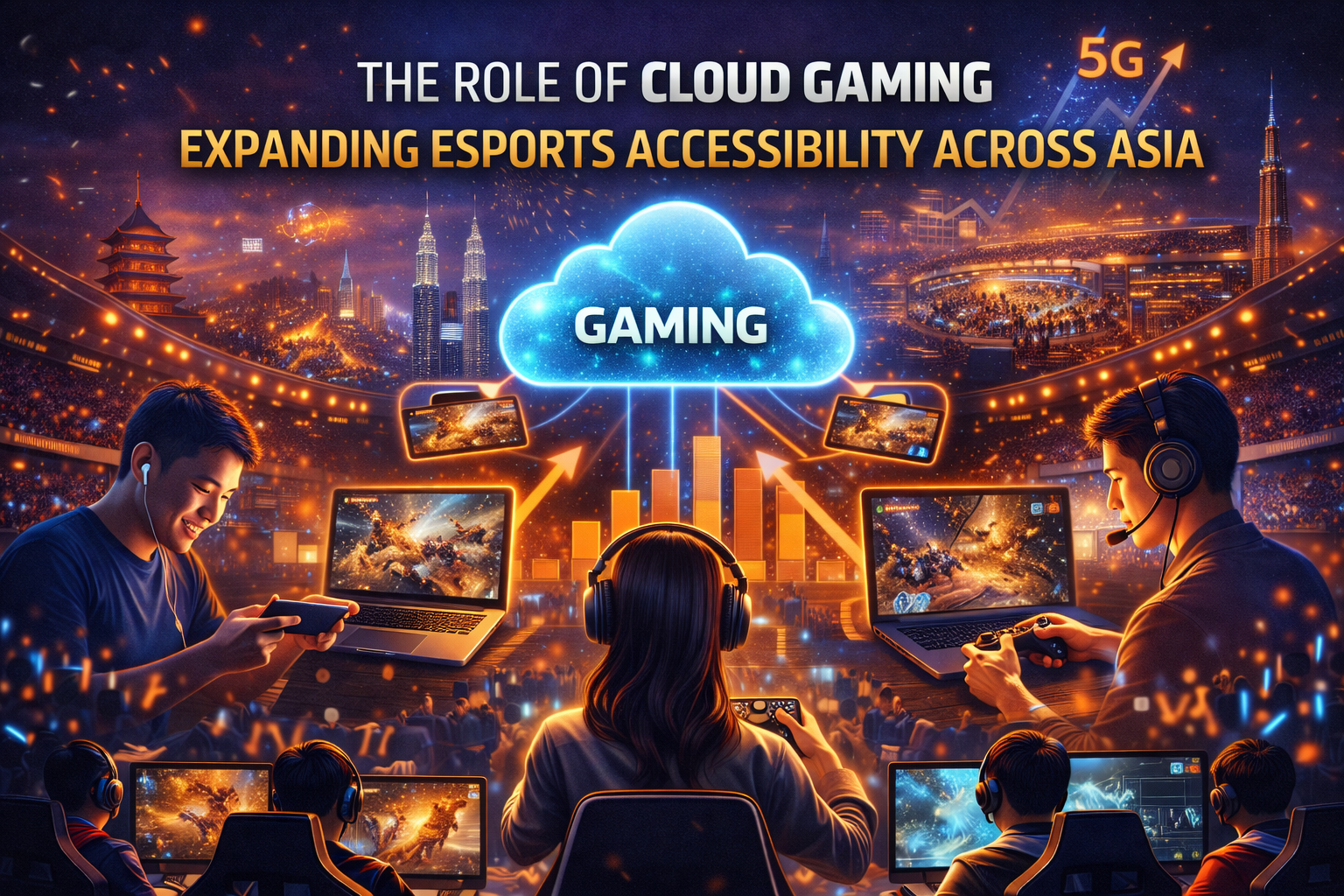
The Role of Cloud Gaming in Expanding Esports Accessibility Across Asia
Cloud gaming is rapidly transforming how players access and experience esports. In Asia, where mobile usage and internet connectivity are continuously improving, this technology is opening new doors for both casual players and aspiring professionals.
By removing the need for high-end hardware, cloud gaming allows users to stream games directly to their devices. This shift is particularly significant in regions where access to powerful gaming systems has traditionally been limited.
What Is Cloud Gaming?
Cloud gaming refers to the process of running games on remote servers and streaming them to users over the internet. Instead of relying on local hardware, players interact with the game through a streaming interface.
This model is similar to video streaming services but requires much lower latency to ensure smooth gameplay.
Core Features of Cloud Gaming
- No need for high-performance gaming devices
- Instant access to games without downloads
- Cross-device compatibility
These features make gaming more accessible and convenient for a wider audience.
Breaking Down Barriers to Entry
One of the biggest challenges in esports has been the cost of entry. High-performance PCs and consoles can be expensive, limiting participation in competitive gaming.
Cloud gaming addresses this issue by shifting the computational workload to remote servers. Players can access high-quality games using affordable devices such as smartphones or basic laptops.
Accessibility Benefits
- Lower upfront costs for players
- Wider reach across different socioeconomic groups
- Increased participation in competitive gaming
This democratization of access is a key driver of esports growth in Asia.
The Impact on Mobile-First Markets
Asia is home to some of the largest mobile gaming audiences in the world. Cloud gaming complements this trend by enhancing the capabilities of mobile devices.
Players can now experience high-end games on their smartphones without compromising performance. This is particularly relevant in regions where mobile gaming dominates the esports landscape.
Why Mobile Integration Matters
- Seamless transition between casual and competitive gaming
- Expanded audience for esports titles
- Greater flexibility in how and where games are played
This integration strengthens the overall ecosystem and attracts new players.
Infrastructure and Connectivity Challenges
Despite its potential, cloud gaming relies heavily on internet infrastructure. Stable, high-speed connections are essential to deliver a smooth gaming experience.
In Asia, the rollout of 5G networks and improvements in broadband connectivity are addressing these challenges. However, disparities still exist between urban and rural areas.
Key Infrastructure Requirements
- Low latency networks
- High bandwidth availability
- Reliable server infrastructure
Continued investment in these areas will be critical for the widespread adoption of cloud gaming.
Opportunities for Esports Organizations
Cloud gaming is creating new opportunities for esports organizations and tournament organizers. With fewer hardware limitations, events can reach a broader audience and include more participants.
This scalability is particularly valuable for grassroots competitions, where accessibility plays a crucial role.
Organizational Benefits
- Expanded player base and talent pool
- Reduced logistical costs for events
- Greater flexibility in tournament formats
These advantages support the long-term growth of the esports ecosystem.
Enhancing the Spectator Experience
Cloud gaming is also influencing how esports is consumed. Streaming platforms can integrate cloud-based features, allowing viewers to interact with games in new ways.
This includes instant replays, multiple viewing angles, and even the ability to join games directly from a stream.
Viewer Experience Improvements
- Interactive streaming features
- Real-time engagement opportunities
- Seamless transition between watching and playing
These innovations are making esports more engaging and accessible to a wider audience.
Security and Fair Play Considerations
As with any technology, cloud gaming introduces new challenges related to security and fair play. Ensuring that games are protected from cheating and unauthorized access is essential.
Cloud-based systems can offer advantages in this area by centralizing control and monitoring gameplay more effectively.
Key Considerations
- Data protection and privacy
- Anti-cheat mechanisms
- System reliability and uptime
Addressing these factors is crucial for maintaining trust within the esports community.
The Future of Cloud Gaming in Asia
The future of cloud gaming in Asia looks promising. As technology continues to advance and infrastructure improves, adoption is expected to increase significantly.
Major technology companies are investing heavily in cloud gaming platforms, signaling strong confidence in its potential.
Future Trends
- Integration with emerging technologies such as AI and VR
- Expansion of cloud-based esports tournaments
- Greater collaboration between publishers and platform providers
These trends will further solidify cloud gaming as a key component of the esports ecosystem.
A More Inclusive Esports Landscape
Cloud gaming is reshaping the esports industry by making it more inclusive and accessible. By lowering barriers to entry and expanding opportunities, it is enabling a new generation of players to participate in competitive gaming.
As adoption continues to grow, cloud gaming will play a central role in shaping the future of esports in Asia. For players, fans, and stakeholders, this technology represents a significant step toward a more connected and inclusive gaming environment.