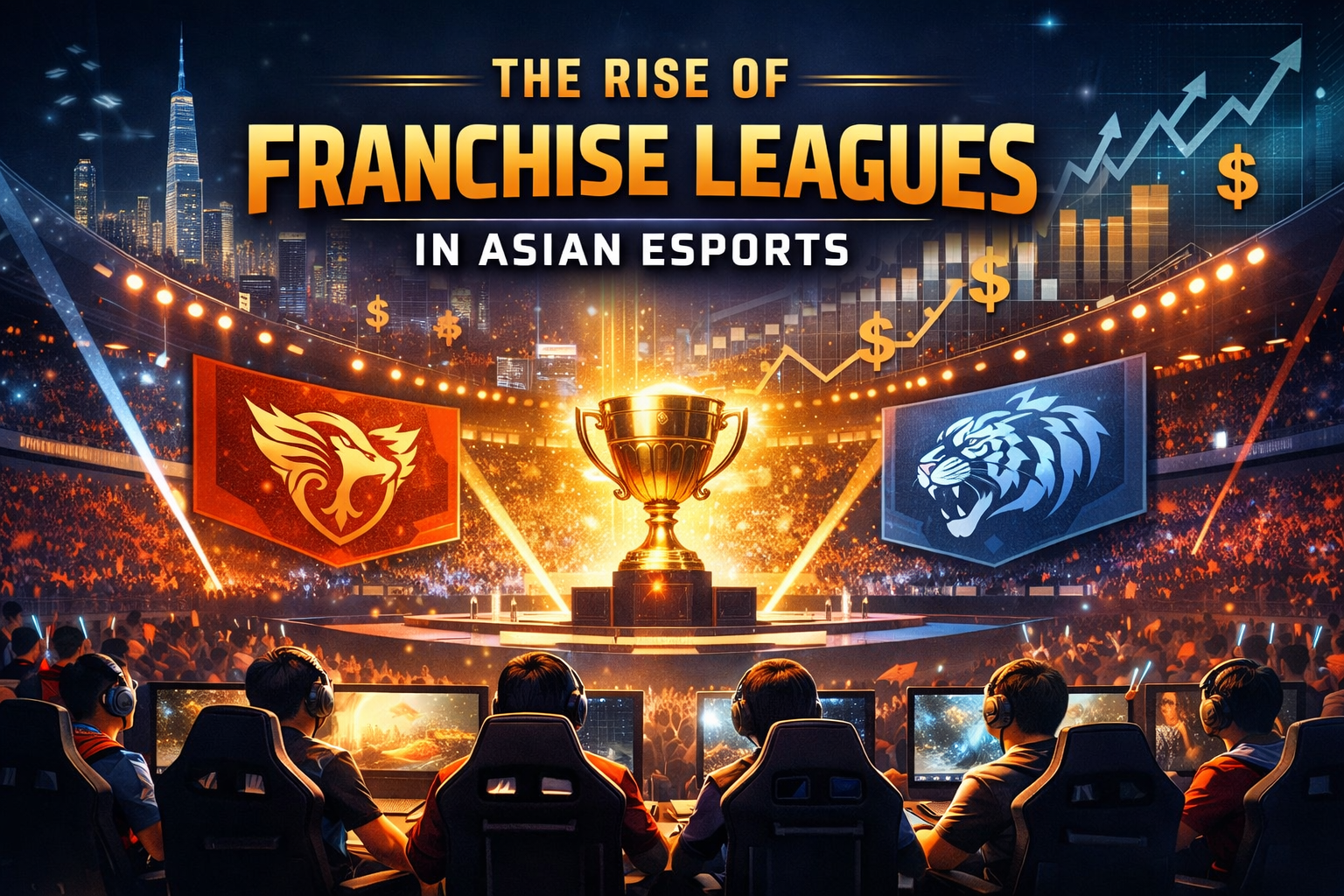
Over the past decade, esports in Asia has evolved from grassroots tournaments into a structured, multi-billion-dollar industry. One of the most significant developments driving this transformation is the rise of franchise leagues. These leagues are redefining how teams operate, how revenue is generated, and how long-term sustainability is achieved in competitive gaming.
Unlike traditional open circuits, franchise leagues introduce a closed ecosystem where teams secure permanent slots. This shift has sparked ongoing discussions about growth, financial stability, and accessibility within the esports landscape.
Understanding the Franchise League Model
A franchise league in esports operates similarly to traditional sports leagues. Teams buy into the league by paying a franchise fee, securing their place for multiple seasons. This eliminates the risk of relegation and provides organizations with greater financial predictability.
In Asia, this model has gained traction across multiple titles, particularly in games with strong regional followings. The structure allows stakeholders to invest in long-term branding, infrastructure, and player development without the uncertainty of short-term tournament results.
Key Features of Franchise Leagues
- Permanent team slots with no relegation system
- Revenue sharing between league organizers and teams
- Centralized governance and standardized regulations
- Enhanced sponsorship and media rights opportunities
These elements create a more stable environment for both investors and teams, positioning esports closer to traditional sports business models.
Why Asia Is Embracing Franchise Systems
Asia’s esports ecosystem is uniquely positioned to adopt franchise leagues due to its large player base, strong mobile gaming culture, and established fan communities. Markets such as China and South Korea have long demonstrated the value of structured leagues in sustaining competitive gaming.
Additionally, Southeast Asia is emerging as a key growth region. With increasing internet penetration and mobile accessibility, the demand for organized and high-quality competitions continues to rise.
Economic Drivers Behind the Shift
The transition toward franchising is largely driven by economic considerations. Investors and organizations are seeking predictable returns, and franchise leagues offer clearer monetization pathways compared to open circuits.
Revenue streams typically include:
- Sponsorship and brand partnerships
- Media rights and broadcasting deals
- Merchandising and digital content
- In-game integrations and publisher support
This diversified income structure reduces reliance on prize pools, which historically dominated esports earnings.
Impact on Teams and Organizations
For esports organizations, franchise leagues represent both an opportunity and a challenge. On one hand, they provide financial stability and long-term planning capabilities. On the other hand, the high cost of entry can limit participation to well-funded teams.
Benefits for Teams
Teams in franchise leagues benefit from guaranteed participation, allowing them to focus on building brand identity and fan engagement. This stability also encourages investment in training facilities, coaching staff, and player welfare.
Furthermore, revenue sharing models help organizations maintain consistent cash flow, reducing financial volatility.
Challenges to Consider
Despite the advantages, franchise leagues are not without challenges. The initial buy-in fees can be substantial, creating barriers for smaller organizations. This may lead to reduced diversity within the competitive ecosystem.
There is also ongoing debate about whether closed systems limit opportunities for emerging talent. Without promotion pathways, new teams may find it difficult to break into top-tier competition.
Sponsorship and Brand Evolution
One of the most noticeable effects of franchising is the evolution of sponsorships. Brands are more willing to invest in stable leagues where visibility and audience engagement are consistent.
In Asia, sponsorship portfolios are expanding beyond traditional gaming brands. Industries such as finance, telecommunications, and consumer technology are increasingly entering the esports space.
Why Brands Prefer Franchise Leagues
- Predictable schedules and consistent exposure
- Stronger team identities and fan loyalty
- Long-term partnership opportunities
This shift is helping esports mature into a more reliable marketing platform, attracting higher-value partnerships.
Fan Engagement and Content Growth
Franchise leagues are also transforming how fans interact with esports. With stable teams and regular seasons, audiences can build long-term connections similar to traditional sports fandom.
Content creation has become a central pillar of engagement. Teams and leagues are investing heavily in social media, live streaming, and behind-the-scenes storytelling to deepen fan relationships.
New Opportunities for Engagement
Fans now have access to:
- Consistent match schedules and narratives
- Player-focused content and documentaries
- Interactive viewing experiences through streaming platforms
This continuous engagement cycle helps maintain audience interest beyond major tournaments.
Sustainability vs Growth: Finding the Balance
The core debate surrounding franchise leagues revolves around sustainability versus growth. While franchising offers financial stability, it may slow the rapid expansion traditionally seen in esports.
Open ecosystems allow new teams to rise quickly, creating dynamic competition. In contrast, franchise leagues prioritize long-term planning over short-term disruption.
Is There a Middle Ground?
Some industry stakeholders are exploring hybrid models that combine franchised leagues with open qualifiers. This approach aims to preserve competitive integrity while maintaining financial stability.
Such models could provide pathways for emerging talent while ensuring that established teams continue to thrive.
The Road Ahead for Asian Esports
As esports continues to evolve, franchise leagues are likely to play a central role in shaping the industry’s future in Asia. Their ability to attract investment, stabilize operations, and enhance fan engagement makes them a compelling model.
However, maintaining a balance between exclusivity and inclusivity will be crucial. Ensuring that new talent and organizations have opportunities to grow will determine the long-term success of franchised systems.
For stakeholders, understanding these dynamics is essential. Whether you are an investor, team operator, or enthusiast, the rise of franchise leagues signals a new chapter in the business of esports—one defined by structure, sustainability, and strategic growth.
Visit Our Media Partner: Mega888